
Call or Text (248) 844-2665
Low Back Pain
A Physical Therapist’s Perspective on Understanding Back Pain
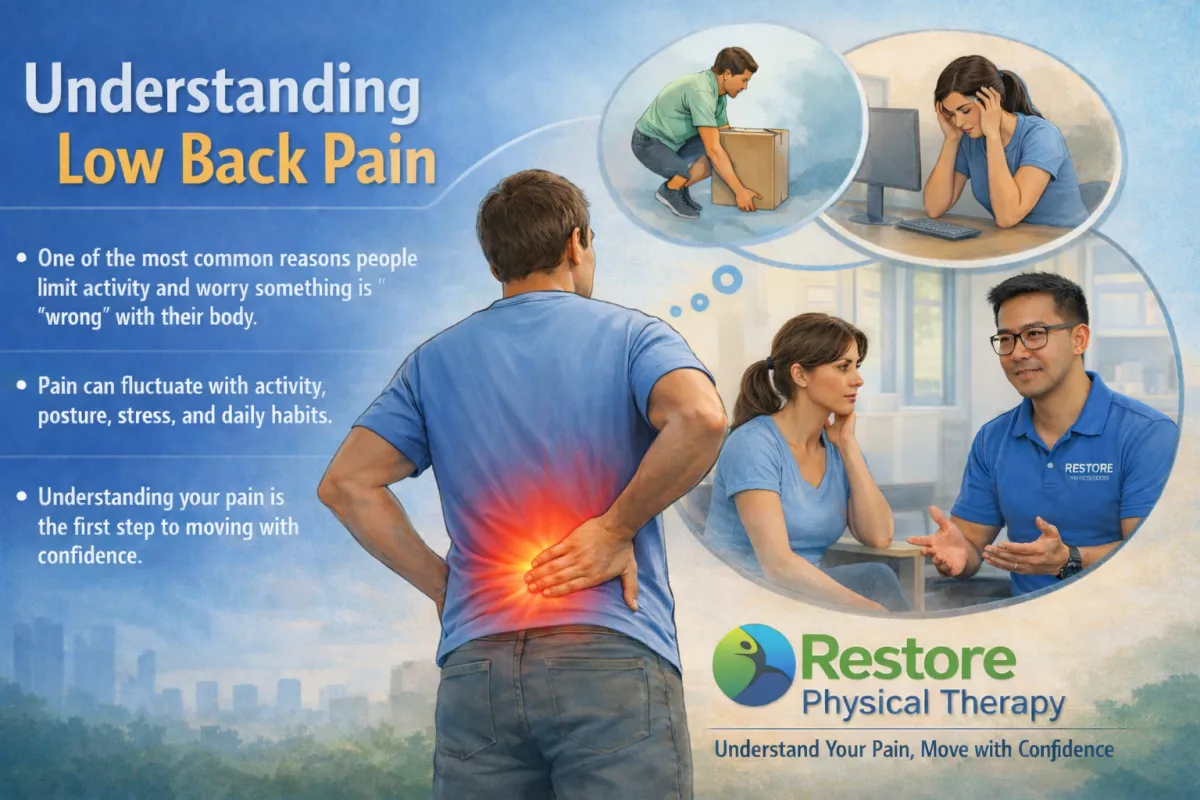
Understanding Low Back Pain — Education and guidance help reduce fear, improve movement, and restore confidence.
Overview: Understanding Low Back Pain
Low back pain is one of the most common reasons people limit activity, change routines, or worry that something is “wrong” with their body. It may appear suddenly or develop gradually, and it often fluctuates depending on activity level, posture, stress, and daily habits.
In many cases, low back pain is not caused by serious damage. Instead, it reflects how the body is responding to load, movement patterns, and changes in routine. Understanding why pain shows up is often the first step toward moving with more confidence and less fear.
At Restore Physical Therapy, we focus on helping people understand their pain, not just chase symptoms.
Common Causes of Low Back Pain
Low back pain rarely has a single cause. It often develops from a combination of factors, including:
Sudden increases in activity
Prolonged sitting or standing
Repetitive bending or twisting
Reduced movement over time
Muscle fatigue and deconditioning
Stress and tension
Pain frequently reflects how the body is handling demand — not structural failure.
Symptoms People Commonly Notice
Low back pain can feel different from person to person. Common experiences include:
Stiffness, especially in the morning
Tightness after sitting or inactivity
Discomfort with bending, lifting, or standing
Pain that comes and goes
Symptoms that improve with gentle movement
Fluctuating symptoms are common and do not automatically mean something is worsening.
Why Back Pain Often Comes and Goes
Many people expect pain to improve in a straight line. In reality, low back pain often improves in phases.
Changes in routine — such as returning to exercise, sitting more, traveling, or seasonal shifts — can temporarily increase symptoms. These flare-ups don’t always mean injury or regression. They often reflect that the body is adjusting to new demands.
Understanding this pattern helps reduce fear and over-protection, which can otherwise prolong symptoms.
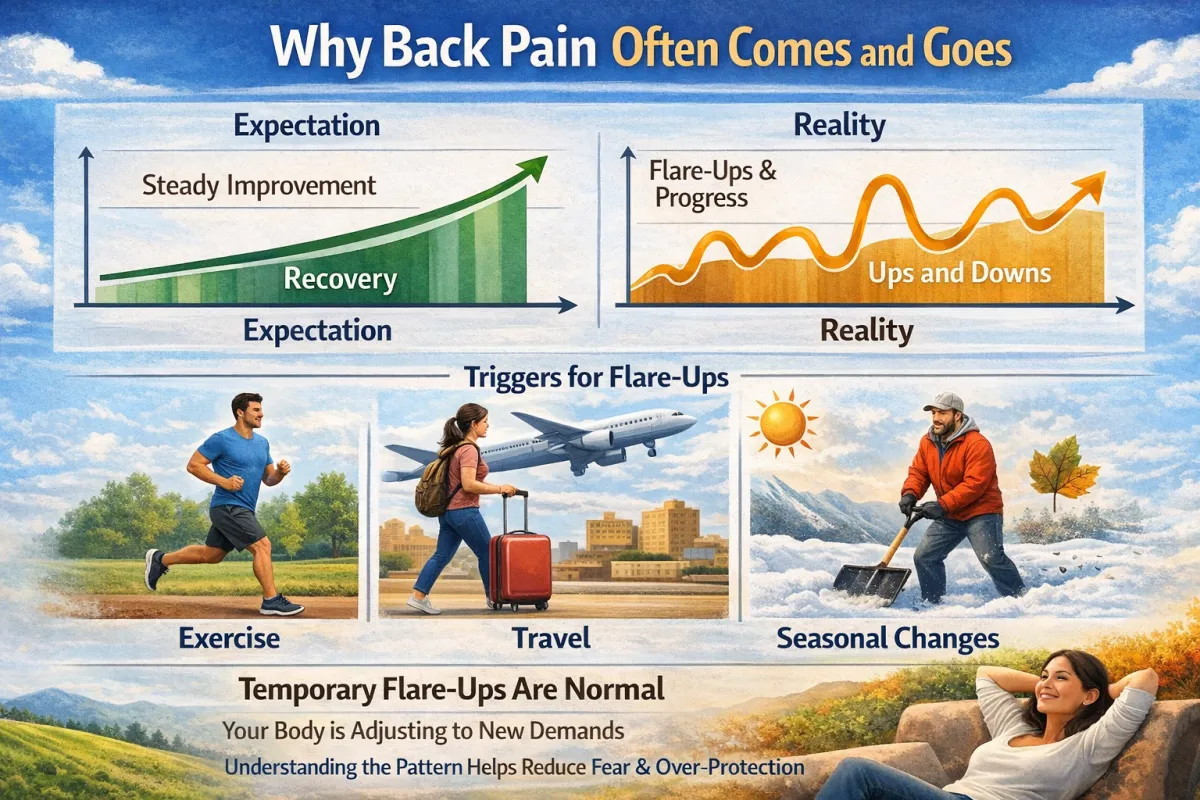
Educational infographic showing why back pain has ups and downs and how flare-ups are a normal part of recovery
Movement, Not Avoidance, Drives Recovery
Avoiding movement completely often leads to more stiffness and reduced tolerance over time. At the same time, pushing through pain can increase irritation.
The goal is intentional movement:
Movements your body can tolerate now
Gradual increases in demand
Enough rest to allow adaptation
When movement is dosed correctly, it helps restore confidence, mobility, and resilience.
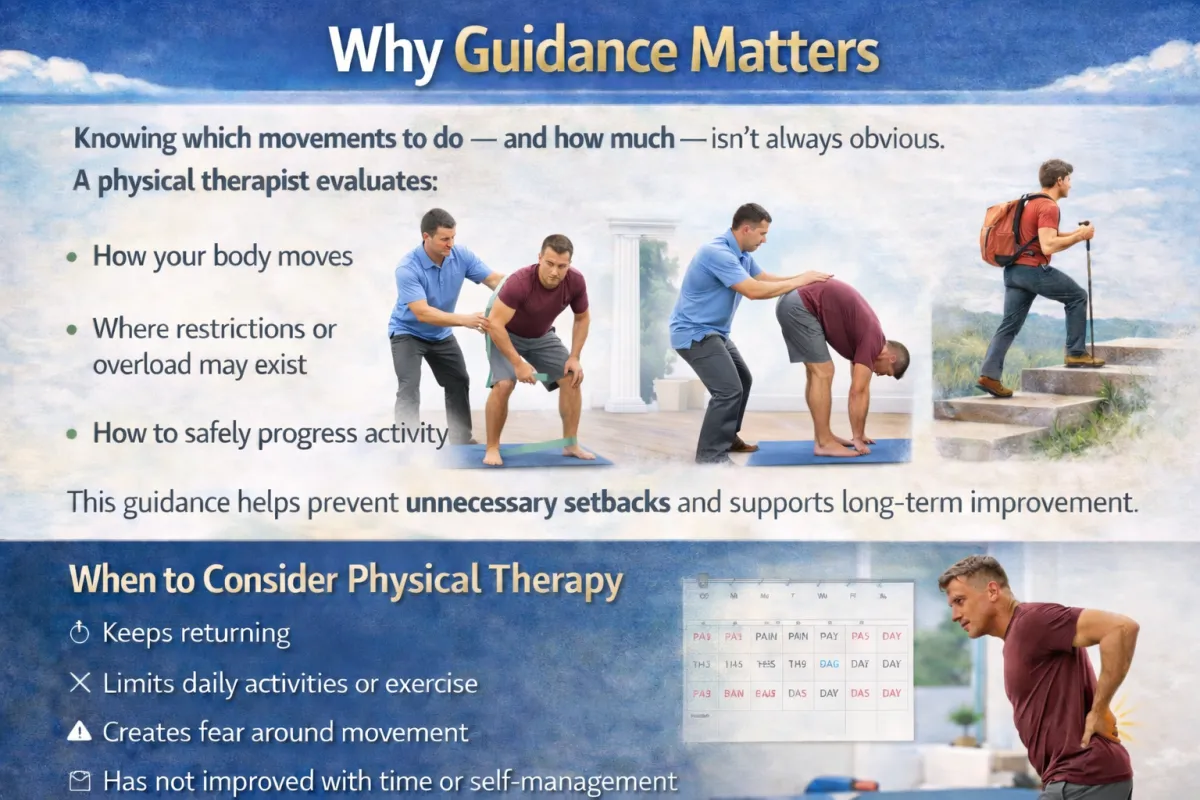
Educational infographic showing a physical therapist coaching movement, assessing restrictions, and explaining when to consider physical therapy for recurring low back pain
Why Guidance Matters
Knowing which movements to do — and how much — isn’t always obvious.
A physical therapist evaluates:
How your body moves
Where restrictions or overload may exist
How to safely progress activity
This guidance helps prevent unnecessary setbacks and supports long-term improvement.
When to Consider Physical Therapy
You may benefit from physical therapy if low back pain:
Keeps returning
Limits daily activities or exercise
Creates fear around movement
Has not improved with time or self-management
Early guidance often helps people move forward with less frustration and fewer flare-ups.
Learn More About Low Back Pain
These resources expand on common questions and seasonal patterns related to back pain:
(These sections will be added and expanded over time as new educational content is published.)
Moving Forward With Confidence
Low back pain is common — but it doesn’t have to control your life.
When people understand why pain shows up and how to respond to it, they often move better, feel more confident, and recover more effectively.
If you’d like help understanding your back pain and what your body needs next, working with a physical therapist can provide clarity and direction.
This content is written and reviewed by Oliver Patalinghug, a licensed physical therapist and owner of Restore Physical Therapy, with over 20 years of experience helping people understand pain, restore movement, and return to daily activities with confidence.
Found this helpful?
Share this resource with someone who might benefit.


Location
Restore Physical Therapy
705 Barclay Circle, Ste. 135
Rochester Hills, MI 48307
(248) 844-2665
Top-Rated Physical Therapy in Rochester Hills for Active Adults 40+
Helping you stay mobile, avoid painkillers and surgery, and live life fully—without invasive treatments.
Join Our Mailing List Today!


Restore Physical Therapy is serving Rochester Hills, Auburn Hills, Rochester, Oakland Twp, Shelby Twp, Troy, Sterling Heights, and surrounding communities.
Copyright Restore Physical Therapy LLC 2026