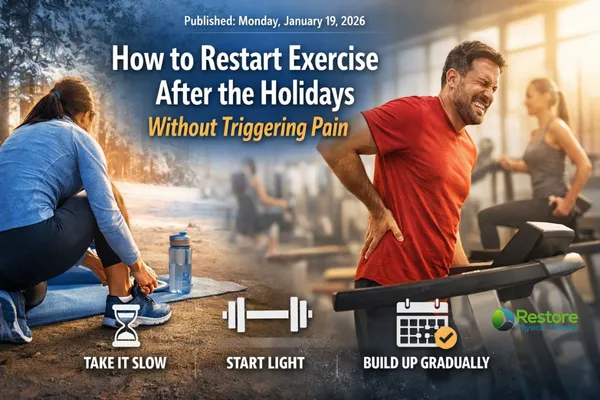
How to Restart Exercise After the Holidays Without Triggering Pain
The start of a new year often comes with renewed motivation to move again.
Walking more.
Going back to the gym.
Restarting routines that were paused during the holidays.
That motivation is a good thing — but January is also one of the most common times people experience pain flare-ups when returning to exercise.
The issue usually isn’t what you’re doing.
It’s how quickly you’re doing it.
Why Pain Shows Up When You Restart Exercise
After weeks of reduced activity, your body doesn’t instantly return to its previous tolerance level.
Muscles, joints, and tendons adapt to the demands placed on them. When those demands drop, tolerance drops with them — temporarily.
When activity suddenly increases:
Duration jumps
Intensity increases
Recovery time shortens
…the body can respond with stiffness, soreness, or pain.
This doesn’t mean you’ve injured yourself.
It usually means your tissues need time to adapt again.
Stiffness and Soreness Aren’t the Same as Injury
Many people assume that discomfort when restarting exercise means something is wrong.
In reality:
Mild soreness that improves with movement is common
Stiffness after inactivity is expected
Symptoms that fluctuate early on are normal
What deserves attention is pain that:
Worsens with continued movement
Sharpens or limits normal motion
Doesn’t settle with rest or light activity
Understanding the difference helps prevent unnecessary fear — and unnecessary rest.
Why “Starting Where You Left Off” Often Backfires
A common January mistake is resuming exercise at the same level you were at months ago.
Even if your mind remembers the routine, your body needs a gradual ramp-up.
Progress tends to happen faster when:
Activity increases are small
Rest days are built in
The focus is consistency, not intensity
Doing a little more each week often leads to fewer setbacks than pushing hard right away.
Movement Helps — When It’s Dosed Correctly
Avoiding movement completely often increases stiffness and reduces tolerance.
At the same time, pushing through pain can prolong symptoms.
The goal is choosing movements your body can tolerate now — and building from there.
This is where guidance matters. A physical therapist helps identify:
Which movements are safe early on
How much is appropriate
When to progress — and when to pause
The Big Picture
January flare-ups are rarely a sign that exercise is bad for you.
They’re usually a sign that your body needs time to adapt again.
When movement is reintroduced gradually and intentionally, most people regain comfort, confidence, and momentum without setbacks.
Learn more:
→ Low Back Pain
→ Shoulder Pain


