
Call or Text (248) 844-2665
Knee Pain
A Physical Therapist’s Perspective on Understanding Knee Pain
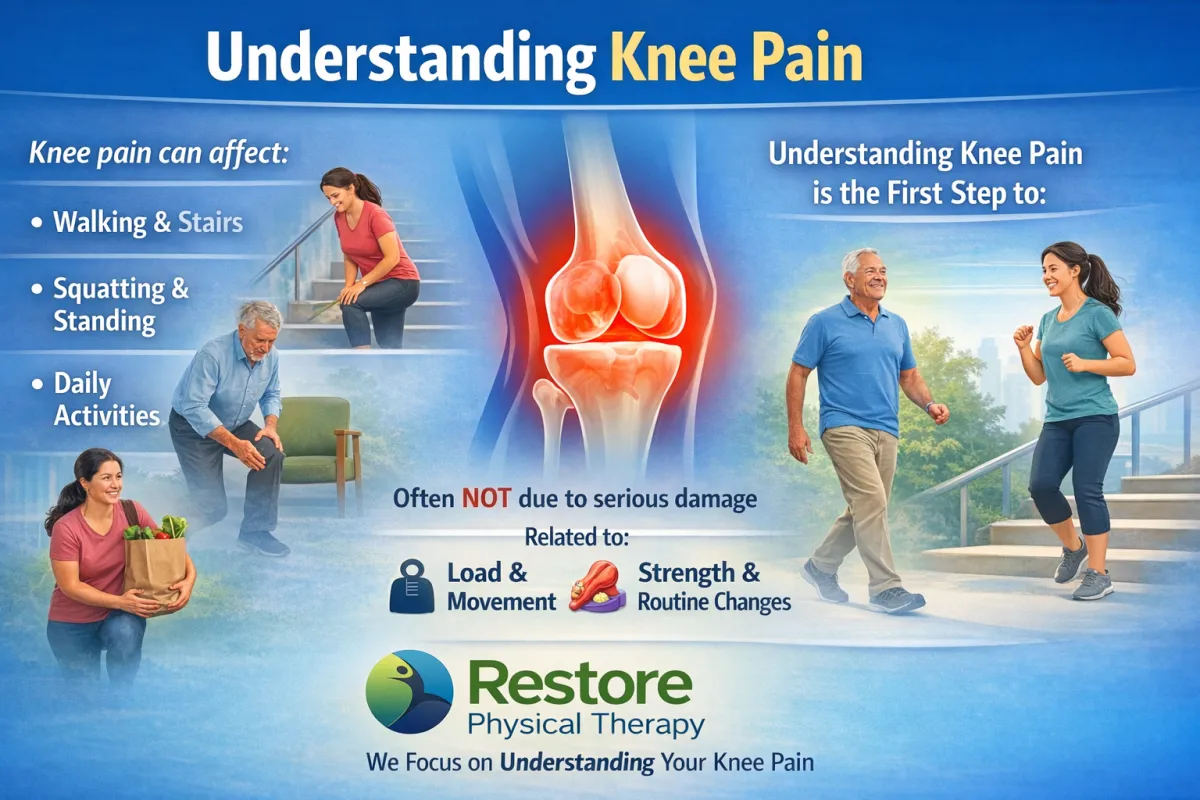
Understanding Knee Pain — why walking, stairs, squatting, and daily movement can become uncomfortable and how Restore Physical Therapy helps guide confident, comfortable movement again.
Overview: Understanding Knee Pain
Knee pain is a common reason people reduce activity, change how they move, or feel uncertain about everyday tasks. It can develop gradually or appear suddenly, and it often changes with walking, stairs, squatting, standing from a chair, or changes in activity level.
In many cases, knee pain is not caused by serious damage. Instead, it reflects how the knee is responding to load, movement patterns, strength, and changes in routine. Understanding why knee pain shows up — especially during weight-bearing activities — is often the first step toward restoring confident, comfortable movement.
At Restore Physical Therapy, we focus on helping people understand their knee pain — not just manage symptoms.
Common Causes of Knee Pain
Knee pain rarely has a single cause. It often develops from a combination of factors, including:
Repetitive walking, running, squatting, or kneeling
Prolonged sitting followed by sudden standing or activity
Sudden increases in activity or changes in exercise routine
Reduced strength or control at the hip, knee, or ankle
Guarding or altered movement due to fear of worsening pain
Pain frequently reflects how the knee is handling load and movement — not structural failure.
Symptoms People Commonly Notice
Knee pain can present in different ways, including:
Pain with walking, stairs, or squatting
Stiffness after sitting or inactivity
Discomfort when standing up from a chair
Swelling or tightness around the knee
Clicking or grinding sensations
Symptoms that improve one day and worsen the next
Fluctuating symptoms are common and do not automatically mean injury.
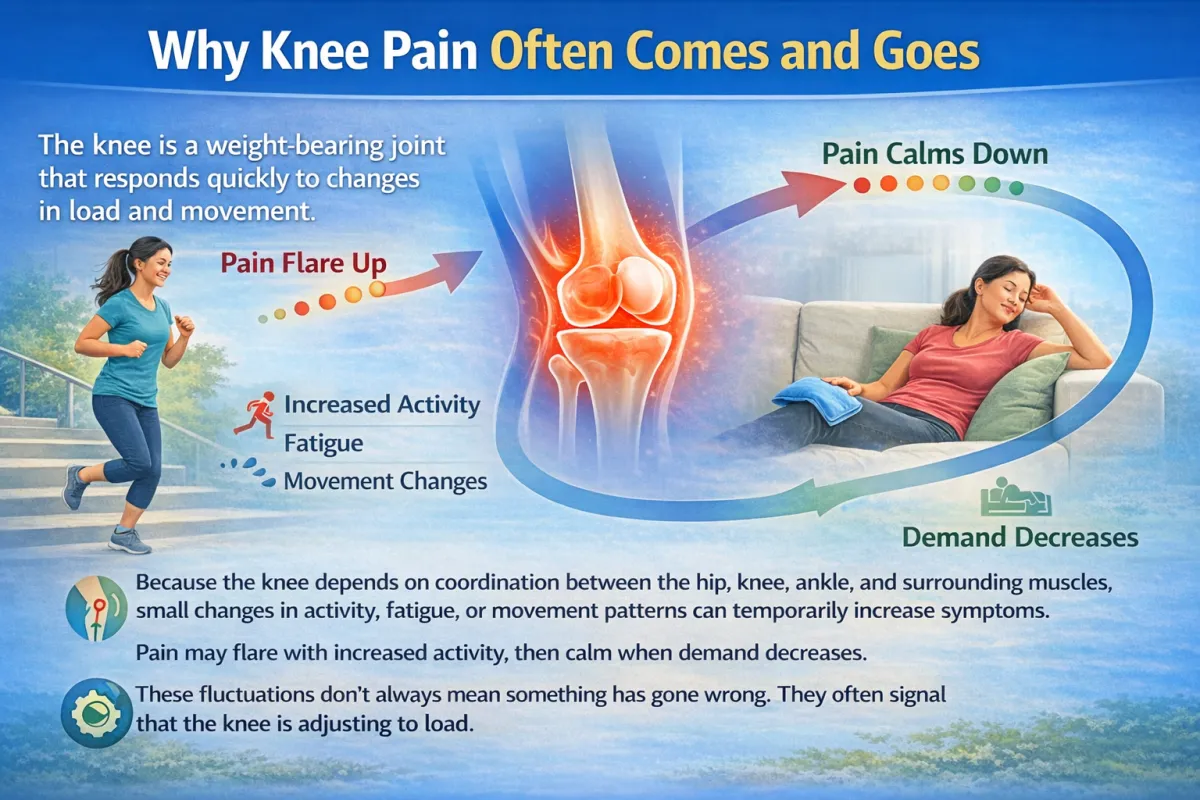
Knee pain often fluctuates with activity level. Changes in load, movement patterns, and fatigue can temporarily increase symptoms before calming as demand decreases.
Why Knee Pain Often Comes and Goes
The knee is a weight-bearing joint that responds quickly to changes in load and movement.
Because the knee depends on coordination between the hip, knee, ankle, and surrounding muscles, small changes in activity, fatigue, or movement patterns can temporarily increase symptoms. Pain may flare with increased activity, then calm when demand decreases.
These fluctuations don’t always mean something has gone wrong. They often signal that the knee is adjusting to load.
Movement, Not Avoidance, Drives Knee Recovery
Avoiding knee movement — especially walking, bending, or weight-bearing tasks — often leads to increased stiffness and reduced tolerance. At the same time, pushing through pain can increase irritation.
The goal is intentional movement:
Choosing activities your knee can tolerate now
Gradually increasing load and range
Allowing time for adaptation
When movement is introduced thoughtfully, the knee often becomes stronger, more resilient, and more comfortable over time.
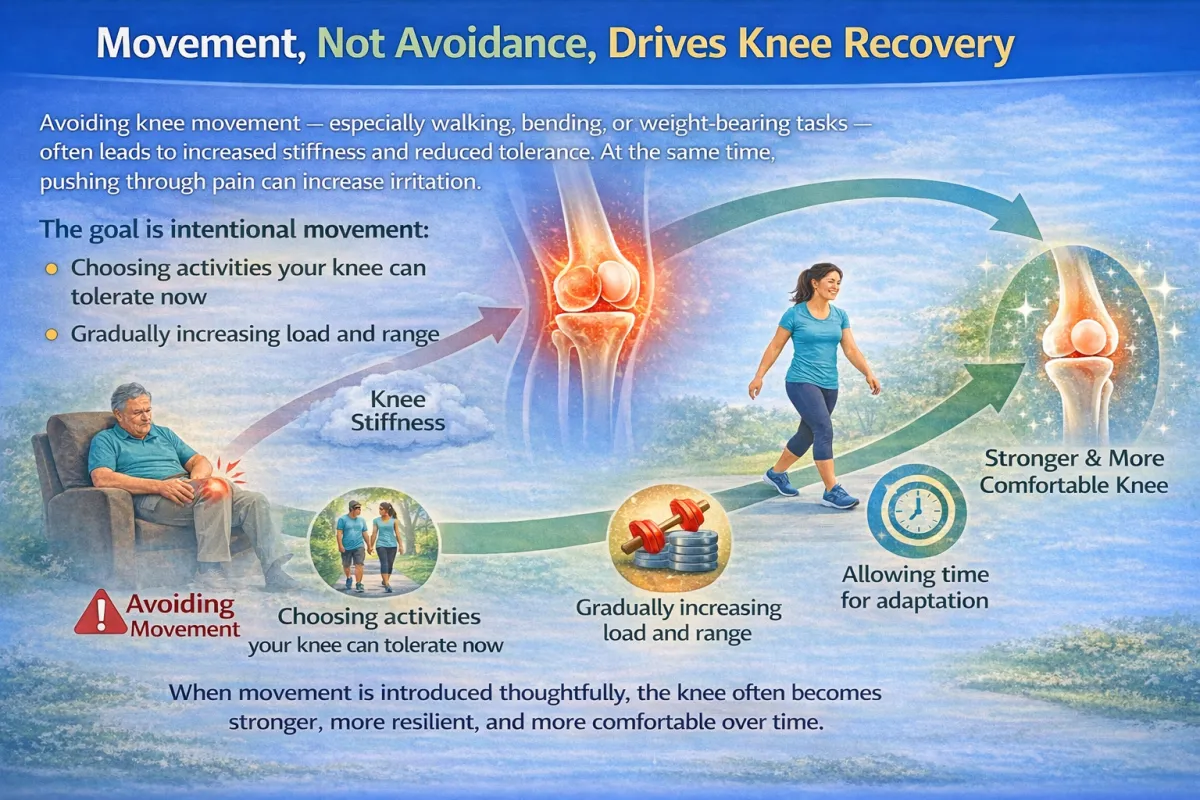
Intentional movement helps the knee adapt, regain strength, and become more comfortable over time. Avoidance often increases stiffness, while thoughtful activity supports long-term recovery.
Why Guidance Matters for Knee Pain
Because knee pain is influenced by how the entire lower body moves, it’s not always obvious which activities help — and which ones increase irritation.
A physical therapist evaluates:
How you walk, squat, and move
How hip and ankle mechanics affect the knee
Which movements are appropriate right now
When to progress and when to modify
Guidance helps reduce uncertainty, fear, and unnecessary setbacks.
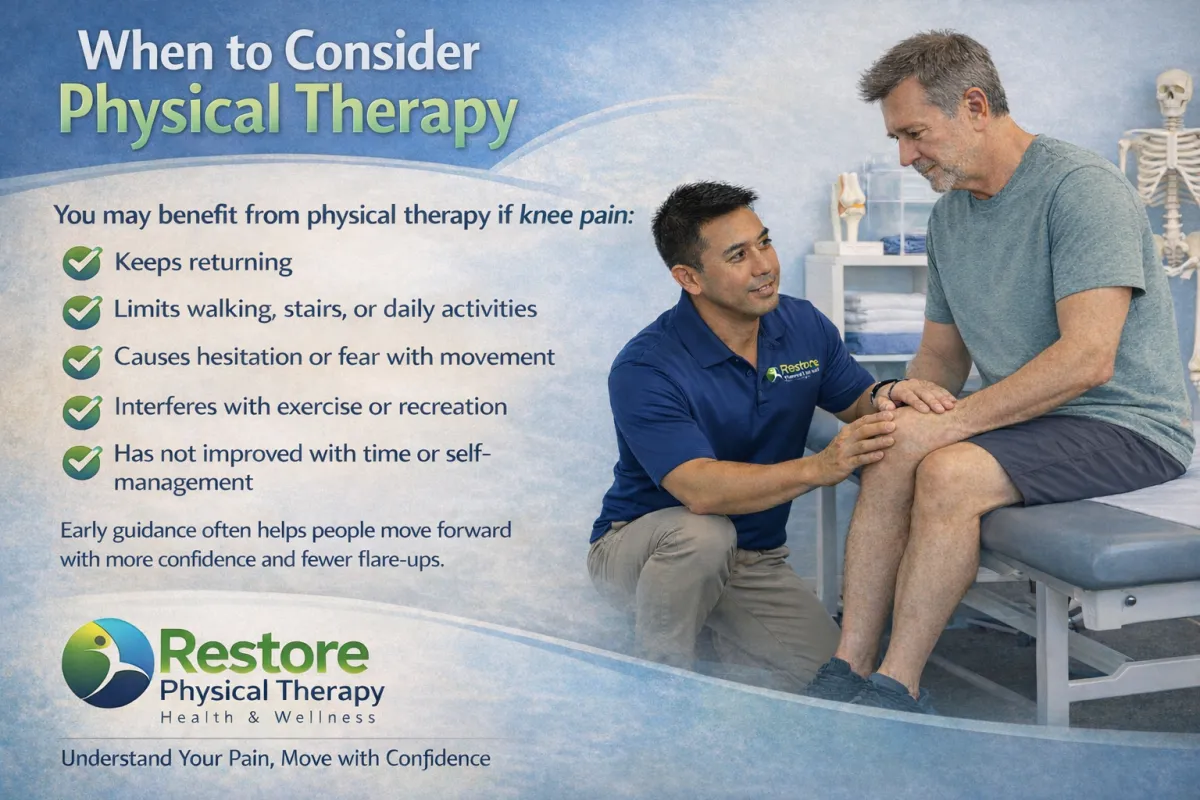
When to Consider Physical Therapy for Ongoing Knee Pain
When to Consider Physical Therapy
You may benefit from physical therapy if knee pain:
Keeps returning
Limits walking, stairs, or daily activities
Causes hesitation or fear with movement
Interferes with exercise or recreation
Has not improved with time or self-management
Early guidance often helps people move forward with more confidence and fewer flare-ups.
Learn More About Knee Pain
These topics expand on common questions and patterns related to knee pain:
Why Knee Stiffness Is Common After Sitting or Rest
(These topics will be expanded into full sections over time as new educational blogs are published.)
Moving Forward With Confidence
Knee pain is common — and in many cases, manageable.
When people understand why knee pain fluctuates and how movement supports recovery, they often regain confidence, improve function, and return to activities they enjoy.
Expert Review & Authorship
This information is written and reviewed by Oliver Patalinghug, a licensed physical therapist and owner of Restore Physical Therapy, with over 20 years of experience helping people restore movement and function with confidence.
Found this helpful?
Share this resource with someone who might benefit.


Location
Restore Physical Therapy
705 Barclay Circle, Ste. 135
Rochester Hills, MI 48307
(248) 844-2665
Top-Rated Physical Therapy in Rochester Hills for Active Adults 40+
Helping you stay mobile, avoid painkillers and surgery, and live life fully—without invasive treatments.
Join Our Mailing List Today!


Restore Physical Therapy is serving Rochester Hills, Auburn Hills, Rochester, Oakland Twp, Shelby Twp, Troy, Sterling Heights, and surrounding communities.
Copyright Restore Physical Therapy LLC 2026