
Call or Text (248) 844-2665
Neck Pain
A Physical Therapist’s Perspective on Understanding Neck Pain
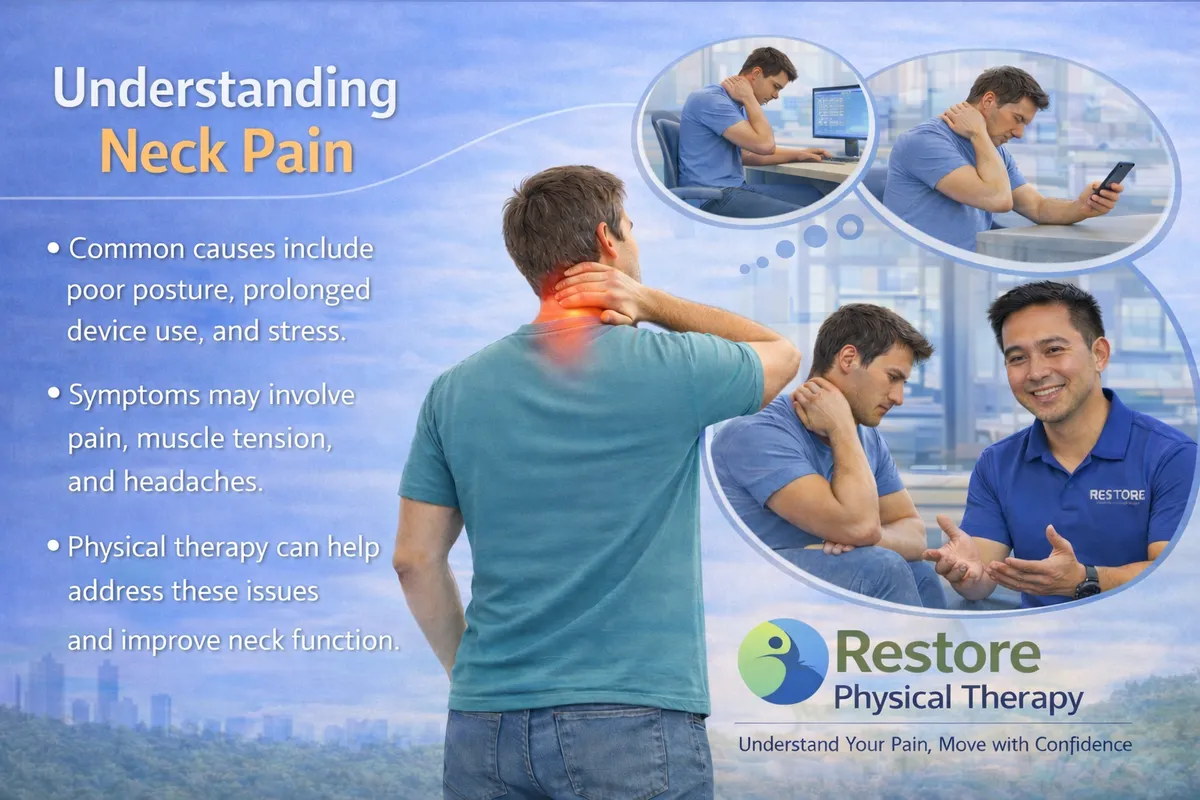
Understanding Neck Pain – Personalized Physical Therapy at Restore Physical Therapy in Rochester Hills
Overview: Understanding Neck Pain
Neck pain is a common reason people feel stiff, guarded, or hesitant to move their head freely. It can develop gradually or appear suddenly, and it often changes with prolonged sitting, computer use, phone use, stress, or sleeping positions.
In many cases, neck pain is not caused by serious damage. Instead, it reflects how the neck is responding to posture, muscle tension, movement habits, and changes in daily routine. Understanding why neck symptoms show up — especially during sitting, turning the head, or looking down — is often the first step toward restoring comfortable, confident movement.
At Restore Physical Therapy, we focus on helping people understand their neck pain — not just manage symptoms.
Common Causes of Low Back Pain
Neck pain rarely has a single cause. It often develops from a combination of factors, including:
Prolonged sitting or computer work
Frequent phone or tablet use with the head tilted forward
Poor sleeping posture or pillow support
Stress-related muscle tension
Reduced movement or guarding due to fear of worsening symptoms
Pain often reflects how the neck is handling sustained positions and load — not structural failure.
Symptoms People Commonly Notice
Neck pain can present in different ways, including:
Stiffness with turning or tilting the head
Aching or tightness across the neck and upper shoulders
Discomfort with prolonged sitting or driving
Headaches associated with neck tension
Symptoms that improve one day and worsen the next
Fluctuating symptoms are common and do not automatically mean something is worsening.
Why Neck Pain Often Comes and Goes
The neck supports the head throughout the day and responds quickly to posture, stress, and sustained positions.
Because neck muscles work continuously to support head position, fatigue, tension, and prolonged postures can temporarily increase symptoms. Pain may flare during busy or stressful periods, then calm when movement and posture improve.
These fluctuations don’t always mean something has gone wrong. They often signal that the neck is responding to demand.
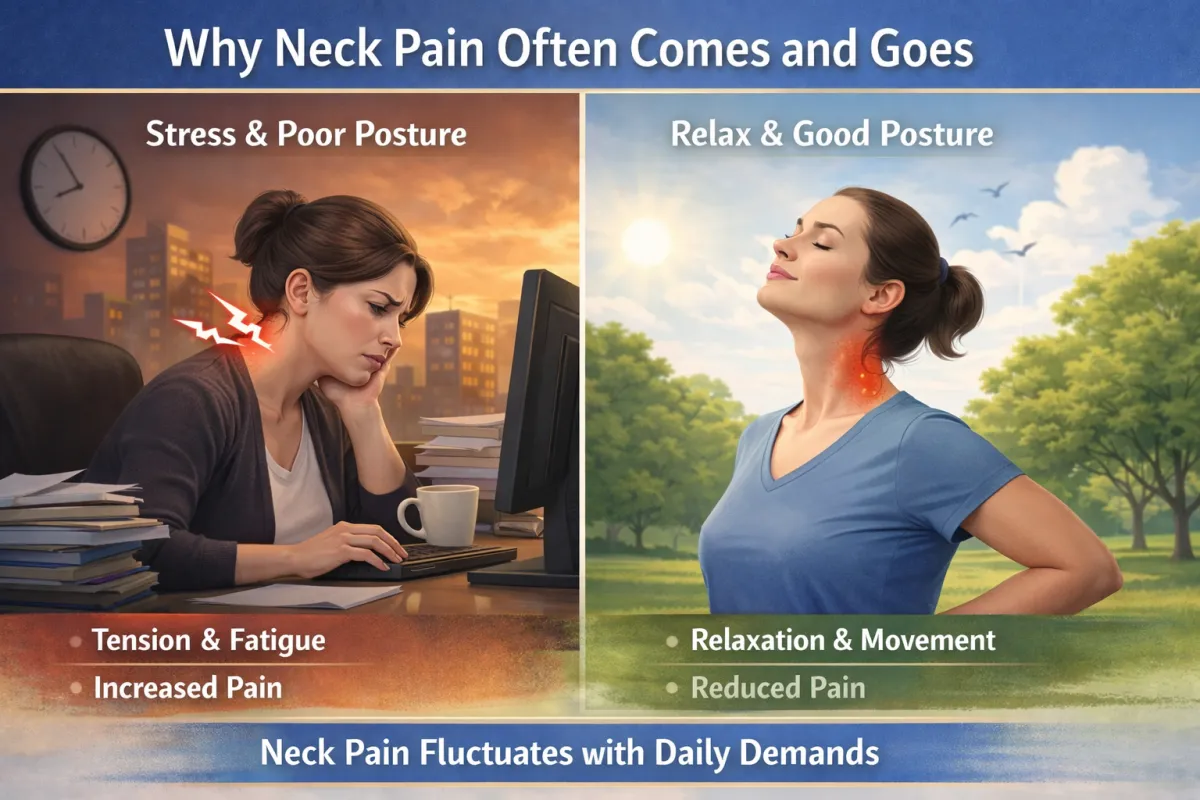
Neck pain often fluctuates based on posture, stress, and daily demand — not necessarily structural damage.
Movement, Not Avoidance, Drives Neck Recovery
Avoiding neck movement — especially turning or looking up and down — often leads to increased stiffness and sensitivity. At the same time, forcing movement through pain can increase irritation.
The goal is intentional movement:
Using ranges your neck can tolerate now
Gradually restoring motion and endurance
Allowing tissues time to adapt
When movement is introduced thoughtfully, the neck often becomes more flexible, resilient, and comfortable.
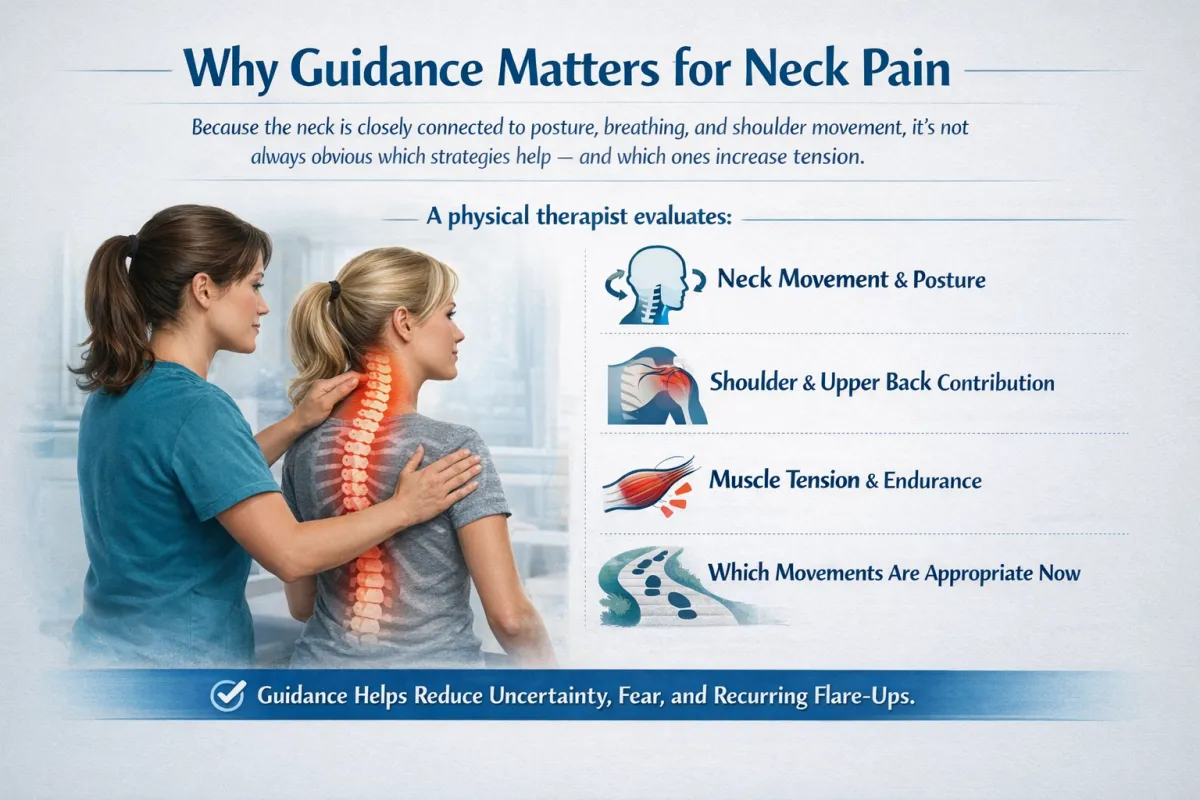
A detailed neck pain evaluation looks beyond just the neck — assessing posture, shoulder contribution, muscle tension, and movement strategy to reduce flare-ups and restore confident motion.
Why Guidance Matters for Neck Pain
Because the neck is closely connected to posture, breathing, and shoulder movement, it’s not always obvious which strategies help — and which ones increase tension.
A physical therapist evaluates:
Neck movement and posture
Shoulder and upper-back contribution
Muscle tension and endurance
Which movements are appropriate now
Guidance helps reduce uncertainty, fear, and recurring flare-ups.
When to Consider Physical Therapy
You may benefit from physical therapy if neck pain:
Keeps returning
Limits head movement or posture tolerance
Triggers headaches or upper shoulder tension
Interferes with work, driving, or sleep
Has not improved with time or self-care
Early guidance often helps restore confidence and reduce recurring discomfort.
Learn More About Neck Pain
These topics expand on common questions and patterns related to neck pain:
Why Neck Pain Is Common With Desk and Phone Use
How Stress and Posture Affect Neck Tension
(These topics will be expanded into full sections over time as new educational blogs are published.)
Moving Forward With Confidence
Neck pain is common — and in most cases, manageable.
When people understand why symptoms fluctuate and how movement supports recovery, they often regain comfort, improve posture tolerance, and move more confidently throughout the day.
This content is written and reviewed by Oliver Patalinghug, a licensed physical therapist and owner of Restore Physical Therapy, with over 20 years of experience helping people understand pain, restore movement, and return to daily activities with confidence.
Found this helpful?
Share this resource with someone who might benefit.


Services
Physical Therapy
Nutrition & Supplement Support
Location
Restore Physical Therapy
705 Barclay Circle, Ste. 135
Rochester Hills, MI 48307
(248) 844-2665
Top-Rated Physical Therapy in Rochester Hills for Active Adults 40+
Helping you stay mobile, avoid painkillers and surgery, and live life fully—without invasive treatments.
Join Our Mailing List Today!


Restore Physical Therapy is serving Rochester Hills, Auburn Hills, Rochester, Oakland Twp, Shelby Twp, Troy, Sterling Heights, and surrounding communities.
Copyright Restore Physical Therapy LLC 2026