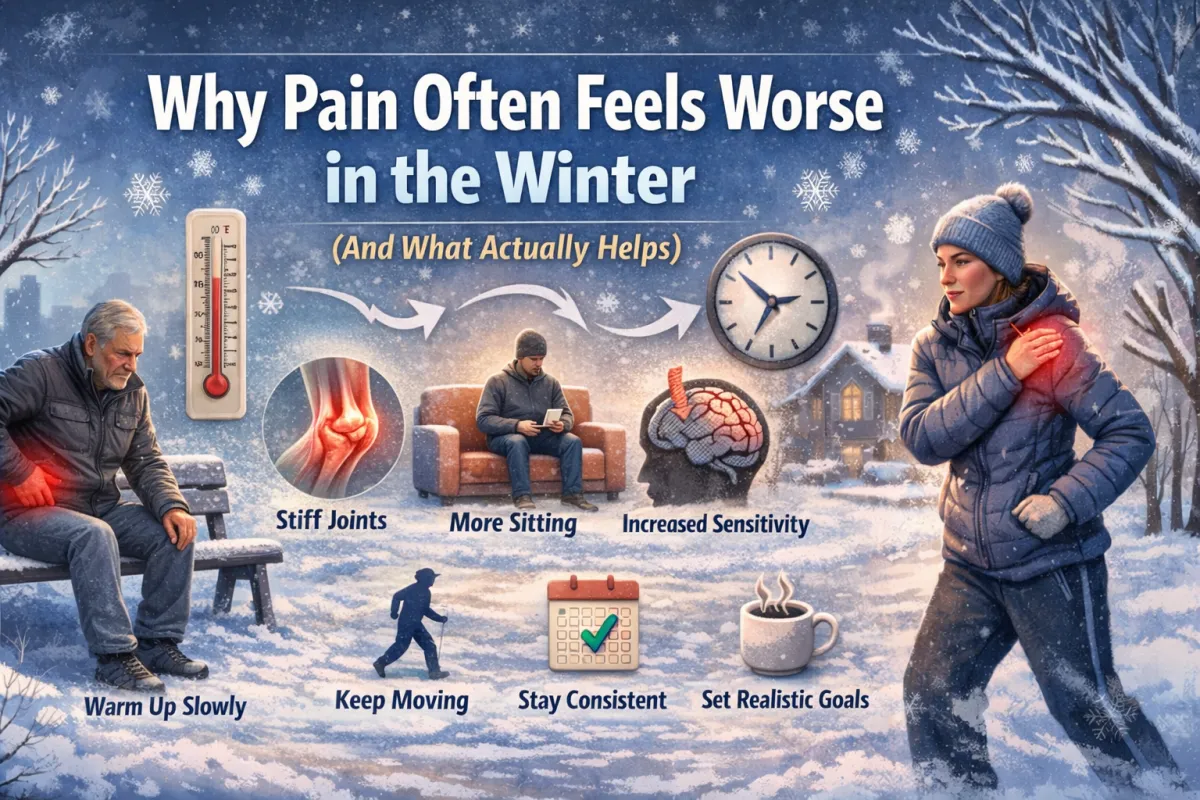
Why Pain Often Feels Worse in the Winter (And What Actually Helps)
Many people notice the same pattern every year.
As winter arrives, pain feels worse.
Stiffness lasts longer.
Movement feels harder.
Old aches feel louder and more persistent.
This often leads people to worry that the cold is damaging their joints or that their condition is getting worse.
In most cases, that’s not what’s happening.
Winter pain is usually a response to cold temperatures, reduced movement, and changes in routine — not new injury or damage.
Understanding why this happens helps people stay calm, keep moving safely, and avoid unnecessary fear.
Why Cold Weather Changes How the Body Feels
Cold temperatures affect how tissues behave.
Muscles warm up more slowly.
Joints feel tighter at rest.
Circulation is slightly reduced in colder environments.
This can make movement feel uncomfortable at first — especially in the morning or after sitting for a while.
Cold temperatures and prolonged sitting can increase stiffness and sensitivity associated with neck pain during the winter months.
These sensations don’t mean tissues are being harmed.
They mean the body needs more time and preparation to move comfortably.
Why Winter Often Comes With Less Movement
Winter activity levels often drop without people realizing it.
Shorter walks.
More sitting indoors.
Less variety in movement.
The body adapts to the demands placed on it.
When movement demands decrease, tolerance decreases, too.
Many people notice that low back pain feels stiffer and more sensitive during the winter, especially after sitting more and moving less.
This is one of the main reasons stiffness and pain feel worse in winter — even when nothing new is “wrong.”
Why Stiffness Doesn’t Mean Injury
One of the most common winter fears is stiffness.
Many people think:
“If I’m stiff, something must be damaged.”
But stiffness that improves with movement is usually related to:
Reduced circulation
Temporary tissue tightness
Lower movement exposure
Cold weather and reduced activity can make shoulder pain feel tighter and more uncomfortable, particularly with reaching or overhead movement.
In most cases, stiffness is the body asking for gradual movement — not rest or avoidance.
Why Pain Feels More Intense in Cold Months
Pain is influenced by more than tissue health alone.
Cold weather, reduced activity, stress, and disrupted routines all affect how the nervous system processes pain signals.
This can make pain feel:
More noticeable
More persistent
More frustrating
Less walking and more sitting in winter can lower tolerance and make knee pain feel worse, even without new injury.
This explains why winter pain can feel worse without meaning you’re getting worse.
What Actually Helps During the Winter
The goal in winter isn’t to push harder.
It’s to support the body’s need for:
Gradual warm-ups
Consistent movement
Realistic expectations
What often helps most:
Longer warm-ups before activity
Gentle movement earlier in the day
Short, frequent movement breaks
Consistency instead of intensity
Avoiding movement entirely usually makes winter stiffness last longer.
Why Winter Pain Doesn’t Mean You’re Losing Progress
Seasonal symptom changes are common.
When routines normalize and movement increases again, tolerance often returns.
Winter pain is usually a temporary response to environment and routine, not a sign that healing has stopped or progress is lost.
Final Thought
If pain feels worse in the winter, you’re not imagining it — and you’re not broken.
Cold weather and reduced movement change how the body feels, but they don’t remove its ability to adapt.
Understanding this allows people to move with confidence, reduce fear, and protect long-term progress.
Winter Pain — Frequently Asked Questions
Below are common questions people ask about winter pain, with links to specific areas of the body for deeper understanding.
Why does pain feel worse in cold weather?
Cold weather can slow muscle warm-up, reduce circulation, and increase stiffness. Winter also often comes with less movement, which lowers tolerance. These changes can make pain feel stronger even when tissues are healthy.
Does cold weather damage joints or make arthritis worse?
Cold weather does not damage joints. While symptoms like stiffness or aching may feel worse in winter, this is usually related to sensitivity and reduced movement — not structural harm.
Why am I more stiff in the morning during winter?
Morning stiffness is common in colder months because the body has been still for hours and circulation is lower. Stiffness that improves with movement is usually normal and not a sign of injury.
Is winter stiffness a sign that something is wrong?
Not usually. Stiffness that eases as you move is often a sign that tissues need gradual movement and warm-up — not rest or avoidance.
Why does pain feel more intense in winter even if nothing changed?
Pain is influenced by the nervous system, stress, activity level, and routine. Winter often affects all of these, which can amplify pain perception without indicating worsening injury.
Should I rest more during the winter if I’m in pain?
Complete rest often makes winter stiffness last longer. Gentle, consistent movement usually helps improve circulation and reduce discomfort over time.
What kind of movement helps during winter pain?
Short, frequent movement usually works better than intense sessions. Longer warm-ups and staying consistent help more than pushing through pain or avoiding movement.
Does winter pain mean I’m getting worse or losing progress?
No. Seasonal increases in pain are common and usually temporary. Winter pain is often related to environment and routine, not loss of progress or failed healing.
Why does movement help stiffness even when it feels uncomfortable at first?
Movement improves circulation and joint lubrication. While the first few minutes may feel stiff, gradual motion often reduces discomfort rather than worsening it.
How long does it take for winter stiffness to improve?
Stiffness often improves as movement becomes more consistent. Tolerance builds gradually — there’s no reset button, but progress returns with steady exposure.
Learn more about common causes of pain:
Low Back Pain | Shoulder Pain | Knee Pain | Neck Pain


