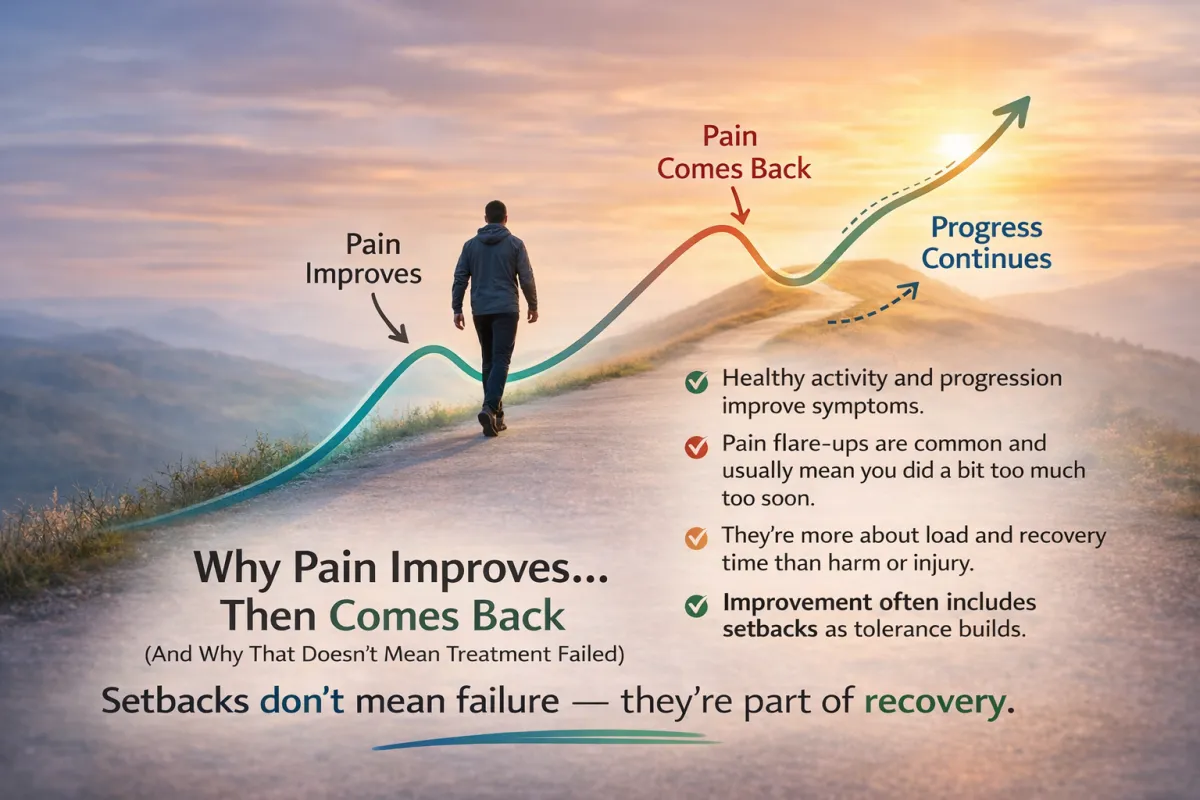
Why Pain Improves…Then Comes Back (And Why That Doesn’t Mean Treatment Failed) | Rochester Hills PT
Many people feel encouraged when pain starts to improve — only to feel discouraged when it suddenly returns.
This is one of the most common reasons people lose confidence in their recovery or assume that physical therapy, exercise, or previous treatment “didn’t work.”
But pain coming back after improvement usually doesn’t mean treatment failed.
More often, it means the body temporarily experienced more demand than it was ready to handle.
Understanding why this happens — and how to respond — can make the difference between quitting too early and continuing to make real progress.
Why Pain Can Improve First — Then Return
Pain often decreases when the body is exposed to the right amount of movement, load, and recovery.
As symptoms improve, people naturally begin to do more:
Longer walks
More household activity
Returning to exercise
Fewer rest breaks
That increase in activity is usually a good sign.
But if demand rises faster than the body’s current tolerance, symptoms can flare again.
This doesn’t mean damage occurred.
It usually means tolerance hasn’t fully caught up yet.
Flare-Ups Are Often About Load — Not Injury
Many people associate pain with injury or harm.
But in ongoing or recurring pain, flare-ups are often related to:
Sudden increases in activity
Reduced recovery time
Stress, fatigue, or poor sleep
Guarded or altered movement patterns
The nervous system and tissues respond to changes in demand — even when healing is happening.
That’s why pain can fluctuate while progress is still occurring underneath.
Why This Feels So Discouraging
When pain comes back, people often think:
“I’m back to square one.”
“This isn’t working.”
“I shouldn’t have done that.”
Those thoughts create fear and hesitation, which often lead to:
Avoiding movement altogether
Over-resting
Losing consistency
Ironically, that response can slow recovery more than the flare-up itself.
What Progress Actually Looks Like
Progress isn’t always a straight line toward zero pain.
More often, improvement shows up as:
Better movement quality
Longer tolerance before symptoms appear
Faster recovery after flare-ups
Less intensity during bad days
These changes indicate increasing resilience — even if symptoms still fluctuate.
Healing is less about avoiding discomfort entirely and more about how quickly and confidently the body recovers.
What To Do When Pain Comes Back
When symptoms flare after improvement, the goal isn’t to stop everything.
A better approach usually includes:
Temporarily reducing intensity — not eliminating movement
Returning to tolerable activities
Allowing symptoms to settle without panic
Gradually rebuilding again
This teaches the body that movement is safe — and that flare-ups are manageable.
Over time, recovery becomes faster and more predictable.
Why Understanding This Changes Outcomes
People who understand why pain fluctuates tend to:
Move with less fear
Stay more consistent
Avoid unnecessary rest cycles
Make better long-term progress
Education doesn’t replace treatment — it supports it.
Clarity reduces fear, and reduced fear improves movement.
Final Thought
Pain improving and then returning can feel discouraging — but it’s often part of the recovery process.
It usually doesn’t mean treatment failed.
It usually means your body is learning how to tolerate more.
Understanding that difference helps people stay engaged, confident, and moving forward.
Learn more about common causes of pain:
Low Back Pain | Shoulder Pain | Knee Pain | Neck Pain | Hip Pain


