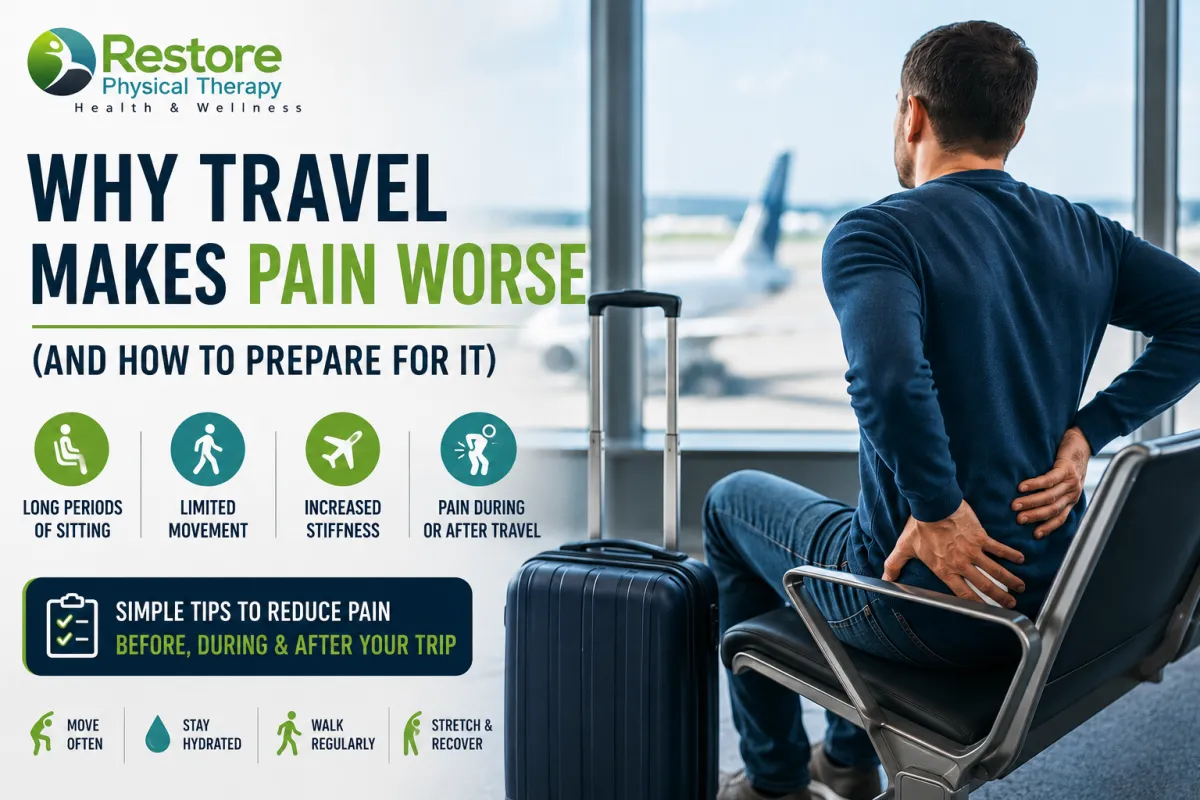
Why Travel Makes Pain Worse (And How to Prepare for It)
Travel is something many people look forward to. Whether you're taking a vacation, visiting family, or traveling for work, long trips can place unexpected stress on the body.
Many people notice increased back pain, hip pain, knee stiffness, foot discomfort, or general soreness during or after travel—even when they felt fine before leaving.
The good news is that this doesn't usually mean an injury occurred.
In many cases, the body is simply reacting to prolonged sitting, reduced movement, and sudden increases in activity.
Why Travel Often Triggers Pain
Travel commonly involves:
Long periods of sitting
Limited opportunities to change positions
Reduced daily movement
Carrying luggage
Extended walking through airports, hotels, or tourist destinations
These changes can temporarily reduce the body's ability to tolerate activity.
As a result, stiffness and discomfort often develop during or shortly after a trip.
Why Sitting for Long Periods Affects the Body
When the body remains in one position for hours at a time, several changes occur:
Joint mobility decreases
Blood circulation slows
Muscles become tighter
Tissues become more sensitive
Activity tolerance temporarily declines
The body adapts surprisingly quickly to inactivity.
Even a single day of prolonged sitting can increase stiffness and make movement feel more difficult.
Why Pain Often Appears After Travel
Many travelers are surprised that pain doesn't always occur during the trip itself.
Instead, symptoms often appear:
When standing up after a long flight or car ride
While walking through an airport
After unloading luggage
Later that evening
The following morning
This delayed discomfort is common.
It usually reflects temporary overload of tissues that have been inactive for extended periods rather than a new injury.
How Can You Prevent Pain While Traveling?
You can reduce travel-related pain by:
Standing and moving whenever possible during long trips
Taking short walking breaks every 30–60 minutes when practical
Performing gentle stretching before and after travel
Avoiding sudden bursts of activity immediately after arrival
Gradually returning to normal exercise and daily activities
Regular movement helps maintain joint mobility, circulation, and tissue tolerance, making pain less likely to develop during or after travel.
Simple Strategies Before and During Travel
Before Your Trip
Stay active in the days leading up to travel
Perform gentle stretching or mobility exercises
Avoid dramatically increasing activity right before departure
During Travel
Change positions frequently
Stand up and walk whenever possible
Perform simple ankle pumps and leg movements while seated
Stay hydrated
After Arrival
Take a short walk
Resume normal movement gradually
Avoid spending the remainder of the day sitting
Movement is often one of the most effective ways to reduce travel-related stiffness.
Why Rest Alone Is Not Always the Answer
Many people respond to travel discomfort by resting completely.
While short periods of recovery can help, prolonged inactivity often leads to more stiffness and discomfort.
Gentle movement helps:
Restore circulation
Improve joint mobility
Reduce muscle tightness
Increase activity tolerance
For most people, movement is more helpful than extended rest.
Travel, Aging, and Joint Health
As we age, joints and soft tissues often become less tolerant of sudden changes in activity.
This is one reason adults frequently notice:
Low back pain after long drives
Hip stiffness after flights
Knee discomfort during vacations
Foot and ankle pain after increased walking
Preparing for travel and maintaining movement throughout the trip can help minimize these issues.
Frequently Asked Questions (People Also Ask)
Why does my back hurt after traveling?
Long periods of sitting can reduce joint mobility, increase muscle stiffness, and make the spine more sensitive to movement. Symptoms often appear when activity resumes.
Is it normal to feel sore after a long flight?
Yes. Many people experience temporary stiffness and soreness after prolonged sitting. This usually improves with gentle movement and activity.
How often should I move during travel?
Whenever possible, try to change positions frequently and take short walking breaks every 30–60 minutes during long trips.
Does travel cause injuries?
Most travel-related discomfort is not caused by injury. It is often a temporary response to reduced movement and increased physical demands.
What helps relieve stiffness after traveling?
Short walks, gentle stretching, hydration, and gradually returning to normal activity levels often help reduce stiffness and discomfort.
Related Pain Resources
If you're experiencing pain during or after travel, you may find these resources helpful:
Foot & Ankle Pain
These conditions commonly become more noticeable during periods of prolonged sitting and increased walking.
Helping Rochester Hills Stay Active and Mobile
At Restore Physical Therapy, we help people throughout Rochester Hills, Troy, Auburn Hills, Oakland Township, Shelby Township, Sterling Heights, and surrounding communities improve mobility, reduce pain, and stay active during everyday activities—including travel.
Understanding how movement affects the body can help you prepare for trips, reduce discomfort, and return to your normal routine more comfortably.
Conclusion
Travel changes how the body moves.
Long periods of sitting, limited position changes, and sudden increases in walking can temporarily reduce activity tolerance and increase stiffness.
Fortunately, most travel-related pain is not a sign of injury.
Staying active, moving regularly, and gradually returning to normal activity levels can help keep your body feeling its best before, during, and after travel.


