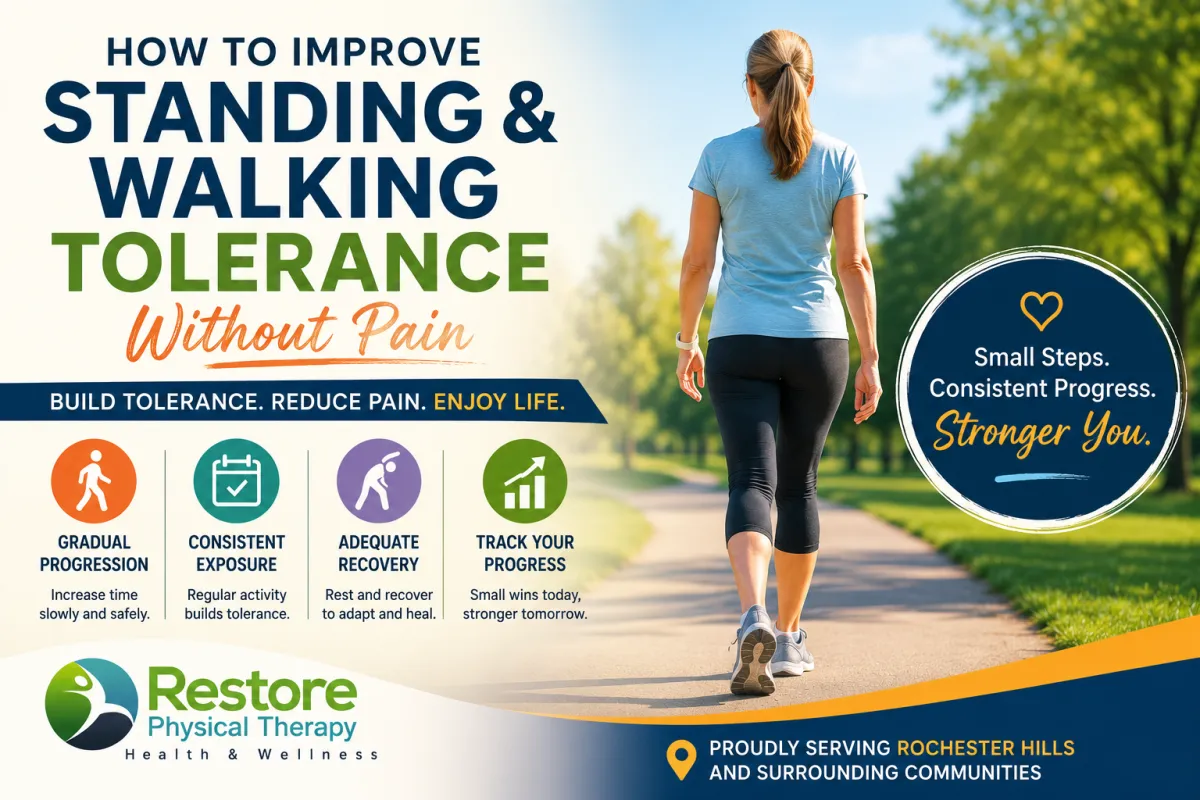
How to Improve Standing and Walking Tolerance Without Pain | Rochester Hills Physical Therapy
Standing and walking are activities most of us take for granted—until they become uncomfortable.
Many people notice that after a vacation, a long workday, an illness, or spending more time sitting, they can no longer stand or walk as long as they used to without pain or fatigue.
The good news is that tolerance can often be improved gradually through consistent movement and proper progression.
Why Standing and Walking Become More Difficult
If your daily routine includes prolonged sitting or limited movement, your muscles, joints, and connective tissues gradually become less accustomed to prolonged standing or walking.
Common situations that reduce tolerance include:
Long periods of sitting
Long workdays at a desk
Recovery after travel
Lifestyle changes
Reduced physical activity
This is a normal response to decreased movement—not necessarily a sign that something is seriously wrong.
Why Standing and Walking Tolerance Drops
Several factors can reduce your body's ability to tolerate prolonged activity.
These include:
Reduced movement variety
Prolonged sitting
Physical fatigue
Mental stress
Sudden increases in activity
When activity suddenly increases without preparation, tissues may become temporarily irritated.
That doesn't mean your body is weak—it simply means it hasn't been gradually exposed to that level of activity.
How do you improve standing and walking tolerance?
You can improve standing and walking tolerance by gradually increasing activity over time rather than making large jumps in duration or distance.
Helpful strategies include:
Walking consistently throughout the week
Increasing standing or walking time in small increments
Taking recovery breaks when needed
Paying attention to how symptoms respond afterward
Staying active instead of avoiding movement completely
Gradual exposure allows the body to adapt more efficiently and often reduces discomfort over time.
How the Body Builds Tolerance
Just like strength improves with exercise, standing and walking tolerance improves with repeated exposure.
Successful progress usually includes:
Consistent daily movement
Small increases in walking distance or standing time
Adequate recovery between activities
Monitoring symptoms rather than avoiding all discomfort
Trying to do too much too soon often leads to unnecessary setbacks.
Slow, steady progress is usually more successful.
Signs You're Making Progress
Many people expect pain to disappear immediately.
In reality, improvement often happens more gradually.
Positive signs include:
Symptoms settle more quickly after activity
Standing feels easier than it did several weeks ago
Walking distances gradually increase
Recovery time becomes shorter
Discomfort doesn't continue to worsen day after day
These changes suggest your body is adapting—not becoming injured.
Common Mistakes That Slow Progress
Some people unintentionally delay improvement by:
Avoiding activity completely
Increasing activity too quickly
Remaining sedentary after symptoms improve
Ignoring recovery between activities
Finding the right balance between movement and recovery is often the most effective long-term strategy.
Frequently Asked Questions (People Also Ask)
Why do my legs hurt after standing for a long time?
Standing for extended periods can fatigue muscles and temporarily increase stress on joints and soft tissues, especially if your body isn't accustomed to prolonged standing.
How can I walk longer without pain?
Increase your walking time gradually, stay consistent, allow for recovery, and avoid sudden increases in distance.
Is walking good if I have pain?
For many people, gentle walking is beneficial when performed within a comfortable range. Gradual movement often helps improve tolerance over time.
Why does my body get tired so quickly when walking?
Reduced activity, prolonged sitting, stress, and deconditioning can all temporarily decrease walking endurance.
How long does it take to improve walking tolerance?
Everyone progresses differently, but many people notice gradual improvements over several weeks with consistent activity and proper pacing.
Related Pain Resources
If standing or walking has become uncomfortable, these resources may also help:
Foot & Ankle Pain
These conditions commonly affect standing tolerance, walking endurance, and overall mobility.
Helping Rochester Hills Stay Active
At Restore Physical Therapy, we help people throughout Rochester Hills, Troy, Auburn Hills, Oakland Township, Shelby Township, Sterling Heights, and surrounding communities improve mobility, increase activity tolerance, and return to the activities they enjoy.
Whether you're struggling with standing through a workday, walking through the grocery store, or enjoying a family vacation, building movement tolerance can make everyday life more comfortable.
Conclusion
Standing and walking tolerance doesn't usually disappear overnight—and it doesn't return overnight either.
The body adapts to what it experiences regularly.
With consistent movement, gradual progression, and adequate recovery, many people can improve their ability to stand longer, walk farther, and participate more comfortably in everyday activities.


